
Ordering hair extensions by color sounds straightforward — until the stock arrives and nothing matches. Color naming systems vary by supplier, market, and product line. If you are sourcing extensions without a clear framework, you are guessing. This article breaks down the major color categories used in the hair extension industry so you can source with precision.
Hair extension colors are categorized into five main types: solid color, piano color, mixed color, rooted T-color (including ombre), and highlight colors (including balayage). Each type describes a different color structure — how colors are distributed across or within a strand. Choosing the right category depends on your end-customer's base hair color, the target effect, and the application method.
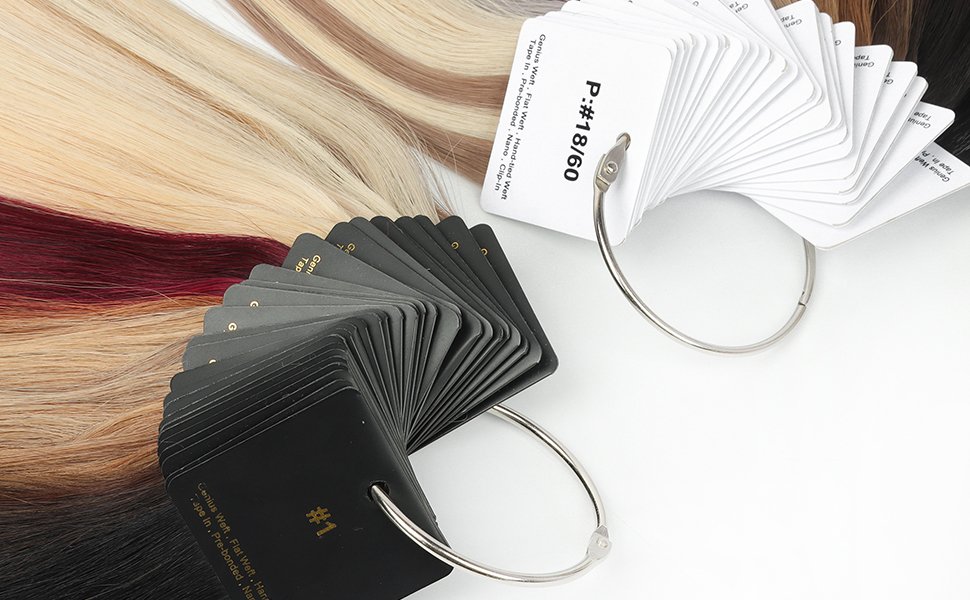
These five categories are not just style preferences. They represent fundamentally different manufacturing processes, different matching requirements, and different levels of sourcing complexity. Understanding the structure behind each one is what separates a confident purchase order from a costly mistake.
What Are the Main Color Categories in Hair Extensions?
Most buyers come to us with a color name or a photo. Neither is enough on its own. The real question is: which color structure does your end-customer need — and does your supplier's naming system match what you are actually ordering?
The five main color categories in hair extensions are solid color, piano color, mixed color, rooted T-color/ombre, and highlight colors (highlight and balayage). These categories describe the structural distribution of color across hair strands — not just the shade. Each category implies a different visual result, application context, and production method.
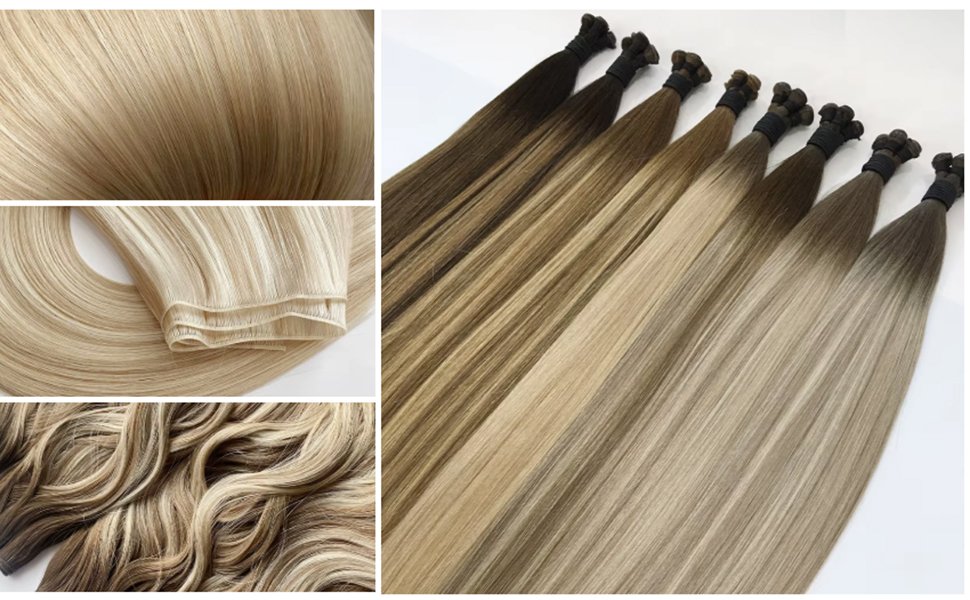
Each category opens up into a wide range of sub-options. Dark shades, light shades, and different color ratio combinations can be layered within each structural type — which is what makes the color conversation in B2B sourcing both flexible and easily confused. The sections below break each category down with the level of detail a wholesale buyer actually needs.
Solid Color: The Baseline of All Hair Extension Color Systems
Solid color seems like the simplest category — and in terms of structure, it is. But it is also where the most naming confusion happens between buyers and factories, especially across different markets.
Solid color means the hair extension is a single, uniform color from root to tip — no gradient, no mixing, no highlights. The same shade runs through the entire strand. It most closely replicates the appearance of natural, uncolored or evenly dyed hair. Common examples include natural black, dark brown, and platinum blonde.
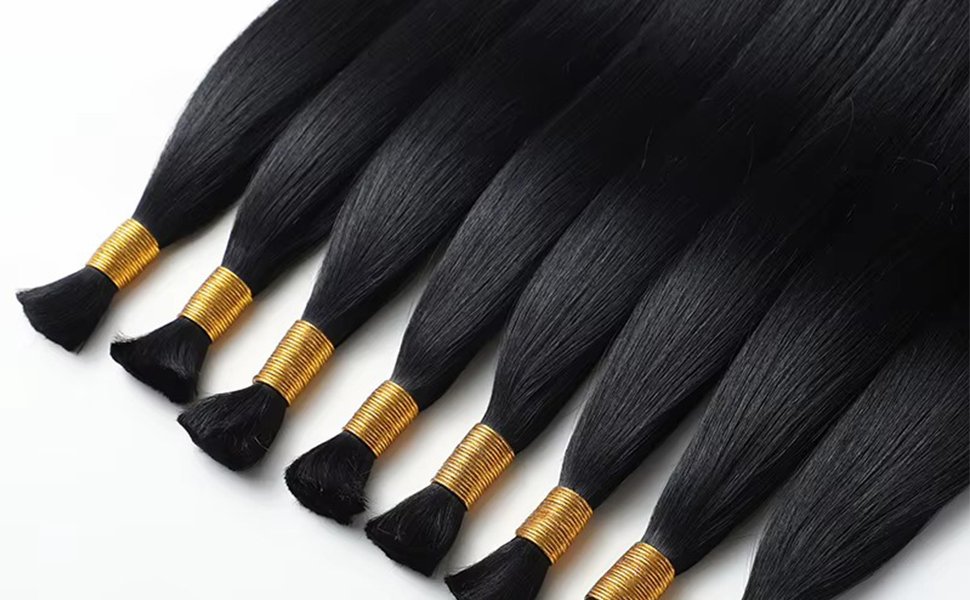
How Solid Colors Are Organized: Dark vs. Light
Within the solid color category, shades are typically divided into dark tones and light tones using a number-based shade chart. This is the most common system used in export markets — but it is not universal, and the exact numbering can vary between suppliers.
As a general rule used across most manufacturers we work with:
- Shades #6 and darker are classified as dark tones — for example, #1B (off black), #2 (darkest brown), #4 (medium brown)
- Shades lighter than #6 are classified as light tones — for example, #8 (light brown), #24 (golden blonde), #613 (platinum blonde)
A Note on #1B vs. #NB — A Common Sourcing Mistake
These two shades look nearly identical in photos. In sourcing terms, they are very different:
| Code | Name | Description | Can Be Bleached Again? |
|---|---|---|---|
| #1B | Off Black | Hair that has been dyed to simulate a soft, natural-looking black | Limited — already processed |
| #NB | Natural Black | Hair that is naturally black, with no prior chemical processing | Yes — suitable for re-bleaching |
Buyers who are sourcing for salon clients that want to further color or lighten the hair need to know this distinction before placing an order. Receiving #1B when you needed #NB means your client cannot achieve the lightened result they want without significant damage.
Why Naming Systems Conflict
The number chart is the most commonly used system in China-to-US and China-to-Europe trade, but it is not the only one. Some European buyers use shade naming conventions tied to international color wheels. Some US salon distributors reference their own branded numbering systems.
In our experience working with wholesale buyers across the US and Europe, the most common solid color confusion comes from assuming that a supplier's #4 is identical to a competitor's #4. It often is not — the actual tone, warmth, and depth can vary by several visible levels depending on the dye formula used. Always request a physical color ring or sample when switching suppliers, even within the same shade number.
Piano Color: When Contrast Is the Point
Piano color is one of those terms that does not translate cleanly across all markets. Some buyers have never heard it. Others use it interchangeably with "mixed color," which is incorrect. Understanding the structural difference matters for what your end-customer actually sees.
Piano color refers to a color structure where hair strands of different colors are arranged in alternating sections — typically one dark bundle followed by one light bundle, in a repeating pattern. The name comes from the visual resemblance to piano keys: high-contrast, clearly separated alternating tones.
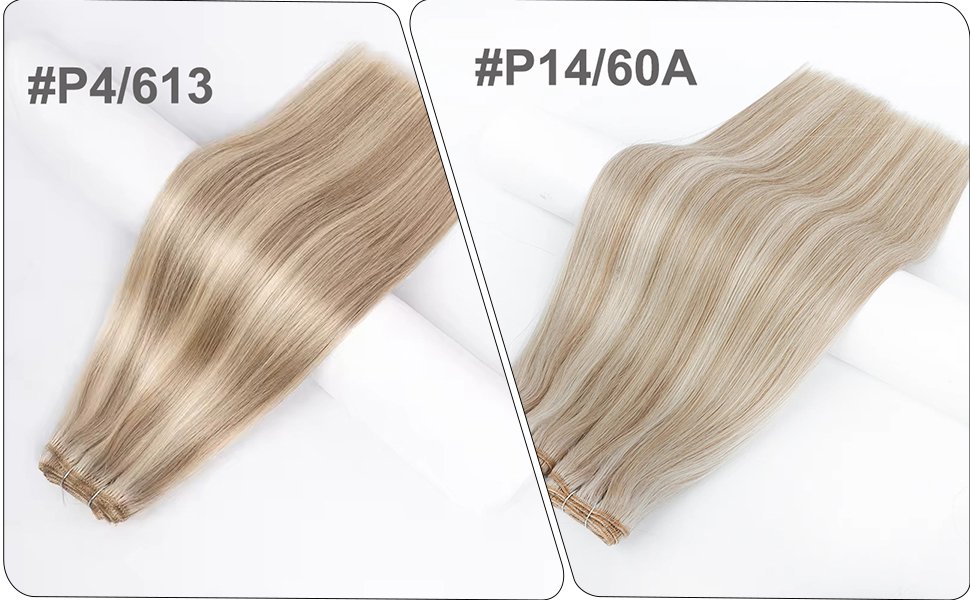
What Makes Piano Color Different from Mixed Color
The defining feature of piano color is that each color bundle remains visually separate. There is no blending at the strand level. The effect reads as distinct color bands when worn — making the contrast visible and intentional.
This is structurally different from mixed color, where individual strands of different colors are blended within the same bundle, creating a unified tonal effect rather than a striped one.
Here is a comparison:
| Feature | Piano Color | Mixed Color |
|---|---|---|
| Color distribution | Bundle-by-bundle | Strand-by-strand |
| Visual effect | Clear stripe contrast | Soft, blended tone |
| Color boundaries | Defined | Absent |
| Effect at distance | Two-tone / striped | Unified intermediate shade |
Piano color works well for buyers supplying markets where bold, editorial contrast is in demand. It is not a natural-look product — it is a high-contrast, intentional effect.
Mixed Color: Depth Without Stripes
Mixed color is one of the most misunderstood categories in wholesale sourcing. Buyers sometimes describe it as "blended" without specifying whether they mean piano-style alternating bundles or true strand-level mixing — and the result they receive can be completely different from what they expected.
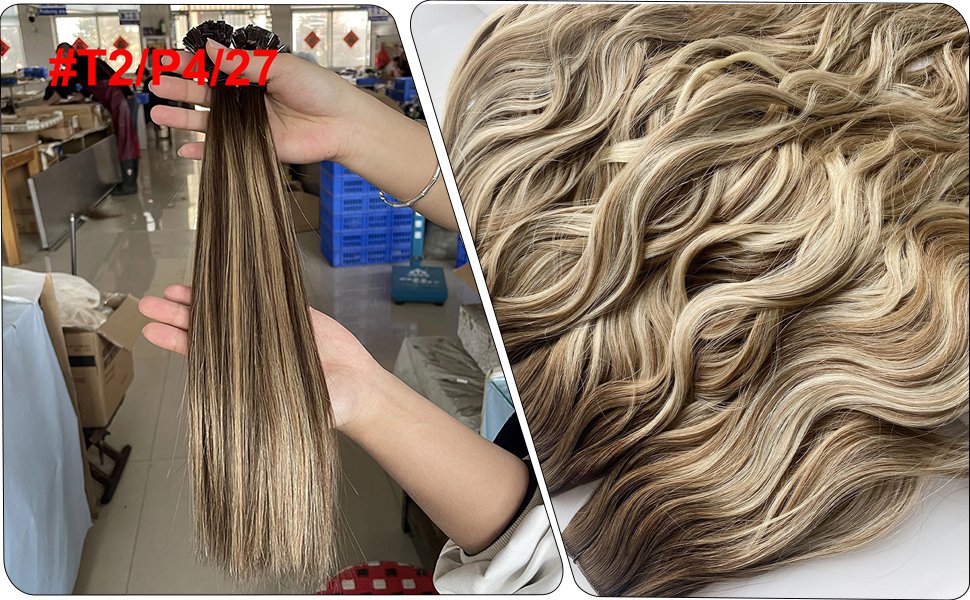
Mixed color means two or more colors are dispersed and blended at the individual strand level within the same bundle. From a distance, the hair reads as a single unified tone. Up close, you can see individual strands of different colors interwoven naturally. There are no visible section boundaries or striped patterns.
The Visual Logic of Mixed Color
The easiest way to understand mixed color is to compare it to solid and piano:
- Solid color = one tone throughout, clean and even
- Piano color = two or more tones in separate, visible stripe sections
- Mixed color = two or more tones blended at strand level, no visible sections
Mixed color sits between solid and piano in terms of visual complexity. It produces more depth and dimension than solid color without the high-contrast stripe effect of piano color. It does not have the directional gradient of ombre. It is, in essence, a softened multi-tone effect — natural-looking but not flat.
Common Mixed Color Combinations
In practice, the most commercially popular mixed color combinations include:
- Dark brown + medium brown (for dimensional brown tones)
- Blonde + light brown (for sun-kissed, natural-looking lightness)
- Black + dark brown (#1B + #2) for a rich, multi-depth dark tone
Buyers sourcing for retail brands that emphasize a "natural everyday look" tend to find mixed colors sell better than solid colors in many Western markets, because the strand-level variation mimics the way natural hair actually looks — rarely a perfectly uniform single shade.
Rooted T-Color and Ombre: The Gradient Family
Root color, T-color, and ombre are often grouped together — and they are related, but they are not the same. Getting this wrong at the order stage can result in receiving a product that looks entirely different from the reference image.
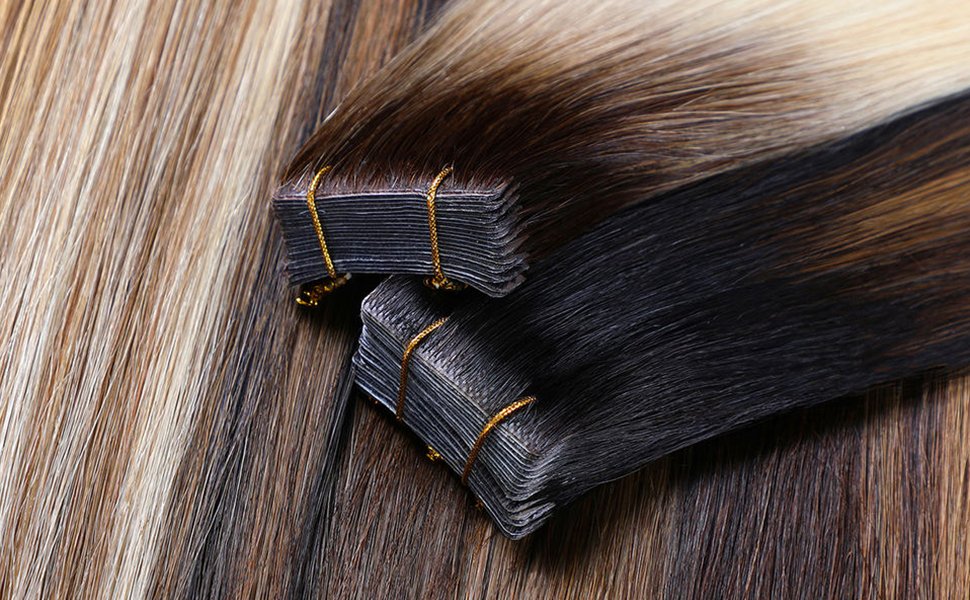
Rooted T-color means the root section of the hair extension is darker than the mid-length and ends. A concentrated dark band sits at the root, transitioning into a lighter shade along the rest of the strand. This mimics the appearance of natural hair regrowth. Ombre takes this further: the gradient is more gradual and pronounced, with a clear, layered color progression from root to tip.
T-Color vs. Ombre: The Key Distinction
| Feature | Rooted T-Color | Ombre |
|---|---|---|
| Gradient type | Short, concentrated root band | Full-length, gradual gradient |
| Transition visibility | Moderate — subtle shift | High — clear layered progression |
| Natural hair reference | New growth appearance | Sun-lightened, bleached tips |
| Application context | Low-maintenance, everyday realism | Fashion-forward, editorial |
Both structures follow a dark-at-root, lighter-at-tip logic — but the ombre version produces a far more dramatic visual transition. Buyers should specify which version they need and, when possible, provide a reference image with an indication of where the color shift begins and how gradual it should be.
Sourcing Note on Ombre
Ombre requires more precise factory communication than solid color. The placement, speed, and ratio of the gradient transition vary between manufacturers. "Ombre" as a label tells your factory the structural type — it does not tell them where the transition starts, how wide the blended zone is, or what the two endpoint shades are. Always confirm these three parameters separately.
Highlight Colors: Highlight vs. Balayage
Highlight and balayage are both techniques that place lighter color onto a darker base — but the application logic is different, and the visual result is distinctly different. Buyers sourcing pre-colored highlight extensions need to know which structure they are actually ordering.
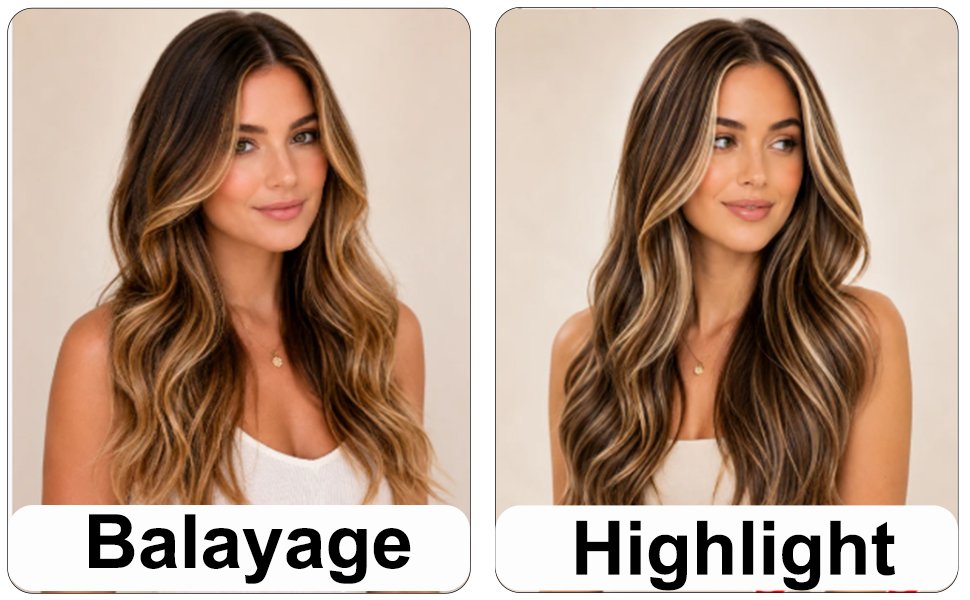
Highlight extensions place lighter color strands in defined, evenly distributed sections starting close to the root. Balayage extensions concentrate lighter color on the mid-length, ends, face-framing sections, and surface layers — not from the root. The result is softer, more diffused, and less structured than traditional highlight.
Breaking Down the Visual Difference
Traditional Highlight:
- Lighter sections start near the root
- Color is distributed in even, defined strand groupings
- Clear contrast between dark base and light sections
- Effect reads as: structured, bright, clearly multi-toned
- Visual reference: dark base + visible lines of lighter color throughout
Balayage:
- Lighter color is concentrated from mid-length to ends and on surface layers
- Root area retains more dark color
- Transition from dark to light is gradual and irregular — not striped
- Effect reads as: natural, soft, "sun-kissed," dimensional
- Visual reference: dark root growing into a progressively lighter, airy mid-section and tip
Which One Sells in Your Market?
In our experience working with buyers across the US and European markets:
- Highlight extensions tend to perform well in salon supply contexts where clients are already familiar with highlight services and want a consistent, predictable color effect
- Balayage extensions tend to perform well in retail and direct-to-consumer contexts where the "natural, low-maintenance look" is the primary selling point
Neither is universally better — the right one depends on who your end-customer is and what look they are trying to achieve.
Frequently Asked Questions
What is the difference between #1B and #NB in hair extensions?
1B (Off Black) is hair that has been dyed to a soft, natural-looking black tone. #NB (Natural Black) is hair that is naturally black and has not been chemically processed. If your client needs to bleach or lighten the hair further, #NB is the correct choice — #1B has already undergone processing and has limited bleachability.
Can I order a custom color that is not on the standard shade chart?
Yes, custom color matching is possible at the factory level. However, custom sampling requires additional lead time compared to catalog colors. You will need to provide a clear reference — ideally a physical sample or a confirmed shade code — along with specifications for the target effect and application method. Contact your sales representative to confirm current capabilities and minimum order requirements.
Why does the same color number look different across different suppliers?
Color numbers (such as #4 or #27) are not standardized across the industry. Different manufacturers use different dye formulas, base tones, and processing methods, so the same number can produce visibly different results. Always request a physical color ring or sample when sourcing from a new supplier, even if the shade number appears identical to what you have ordered before.
What information does a factory actually need to match a color accurately?
Accurate color matching requires more than a photo. You should provide: the target shade code or a physical reference sample, the end-user's natural base hair color, the desired effect (e.g., root-to-tip uniformity, gradient, highlight placement), and the application method. Omitting any of these increases the chance of a mismatch.
Is ombre the same as balayage?
No. Ombre is a structural color category — a gradient that runs from dark at the root to light at the tip across the full length of the hair. Balayage is a placement technique — lighter color is swept onto specific surface sections, mainly mid-lengths and ends, without starting from the root. They can look similar in some finishes, but they are produced differently and create different effects.
Conclusion
Hair extension color categorization covers five distinct structural types: solid color, piano color, mixed color, rooted T-color and ombre, and highlight colors including balayage. Each one describes how color is distributed — not just what shade it is. Choosing the wrong category, or confusing naming systems between suppliers, is one of the most common sourcing errors in this category — and one of the most avoidable.
Solid colors require clarity on shade codes and processing status. Piano and mixed colors require understanding of how strands are arranged. Gradient and highlight structures require confirmed specifications on placement, transition, and base-to-target ratios.
If you are currently building out a color range for your distribution business and want to confirm which structures and shade systems Xpertric currently supports, reach out directly at info@xpertric.com or visit www.xpertric.com. We work with wholesale buyers across the US, Europe, and beyond — and we are happy to walk through color specs before you place an order.