
Sourcing nano ring hair extensions should be straightforward — but it rarely is. Buyers who treat it as a standard re-order often discover the real problems after installation: slipping rings, damage complaints, and returns that eat into margins fast. The right sourcing decision starts long before you approve a sample.
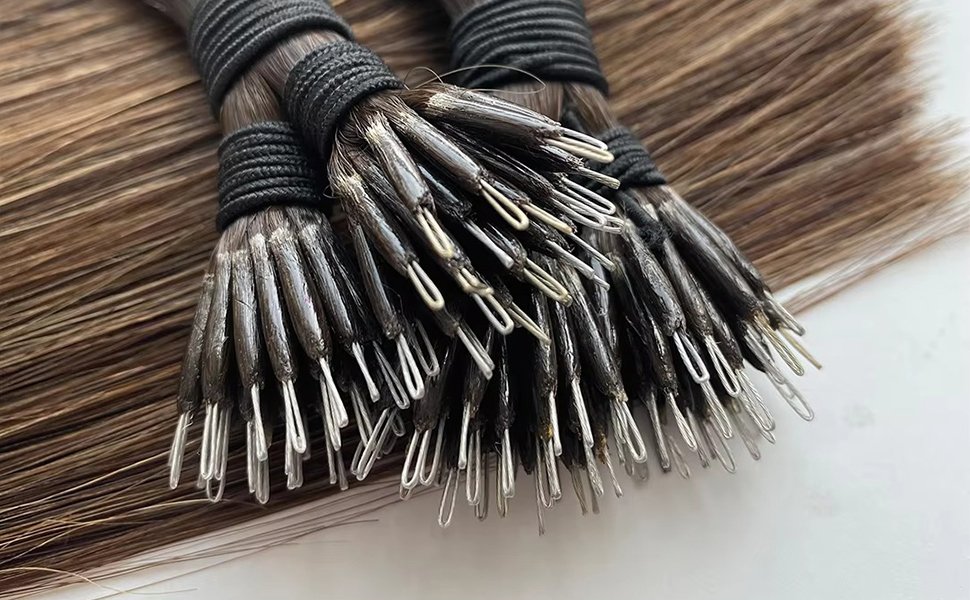
Nano ring hair extensions are a strand-by-strand attachment method that uses a tiny metal ring (smaller than a micro ring) to secure a small section of extension hair to a natural strand without heat or adhesive. The ring is clamped shut with a special tool. Because the ring is ultra-small and lightweight, the method is considered low-damage — but only when the ring size, clamping force, and hair type are correctly matched.
The answer above covers the basics. But if you are a wholesale buyer, brand owner, or distributor, the basics are not your problem. Your problem is whether this SKU will perform consistently across your customer base, hold up through a full batch order, and survive post-installation. The sections below address exactly that — from installation mechanics to cost benchmarks, real downsides, and the product variants that matter most for your lineup.
What Are Nano Ring Hair Extensions?
Most buyers already know the surface answer. The deeper question is: what makes nano ring different enough from micro ring to justify a separate sourcing decision?
Nano ring hair extensions use a metal cylinder ring with an interior diameter of approximately 3 mm — roughly half the size of a standard micro ring. The smaller ring holds fewer strands of hair, which means lighter weight per attachment point, less tension on the root, and a lower visibility profile. This makes nano ring better suited to fine or low-density hair types than micro ring.

The size difference sounds like a spec detail. Commercially, it is a customer segmentation decision. Getting this wrong is one of the most consistent patterns I hear from wholesale buyers who come to us after a bad previous order.
Nano Ring vs. Micro Ring: A Segmentation Question, Not Just a Size Chart
Buyers regularly conflate nano ring and micro ring because both fall under the "bead method" category. The size difference changes the end-customer fit entirely.
| Feature | Nano Ring | Micro Ring |
|---|---|---|
| Ring diameter | ~3 mm | ~4–6 mm |
| Hair strands per ring | Fewer (finer sections) | More (thicker sections) |
| Best for hair type | Fine, low-density | Medium to thick |
| Visibility at scalp | Very low | Low to moderate |
| Clamping tool required | Nano-specific tool | Standard micro tool |
| Weight on root | Very light | Light to moderate |
The commercial implication is direct. If your end customers — the salon clients or consumers buying from your brand — skew toward fine hair, nano ring is the right match. If you push nano ring into a market where end users have medium-thick hair, the attachment count goes up, the application time increases, and stylists start complaining about the product before your customer ever does.
Buyers who order nano ring without mapping it to their end-customer hair profile are not making a product decision — they are accepting a liability.
The Ring Material Question Buyers Ask (and the Better Question They Should Ask)
Nearly every wholesale inquiry I receive asks: copper or aluminum rings? It is a reasonable starting point. Copper is denser and holds its shape under repeated clamping; aluminum is lighter and less expensive. But ring material is a proxy metric, not the real quality gate.
The actual damage driver is clamping force consistency. A ring that requires excessive tightening to stay closed will stress the hair shaft over weeks of wear. A ring that closes loosely will slip — and a slipping ring pulls on the root when the hair moves.
When evaluating supplier samples, the question to ask is not "what material is the ring?" The question is: does the ring close fully and hold position at a consistent clamping force, without requiring over-tightening on a fine hair section?
Ask your supplier for their QC process around ring closure retention. If their answer is limited to visual inspection of the ring before shipping, that is a gap worth noting.
How to Install Nano Ring Hair Extensions?
Installation is the stylist's domain, not yours — but as a wholesale buyer, you carry indirect responsibility for how well your product installs. Complaints about difficult application or post-installation slippage trace back to the product spec, not just the stylist's technique.
Nano ring hair extensions are installed by threading a small section of natural hair through the nano ring using a pulling needle or loop tool, then sliding the extension strand into the ring alongside it, and clamping the ring shut with a nano-specific pliers tool. No heat and no adhesive are used. Removal requires the same pliers to gently open the ring.
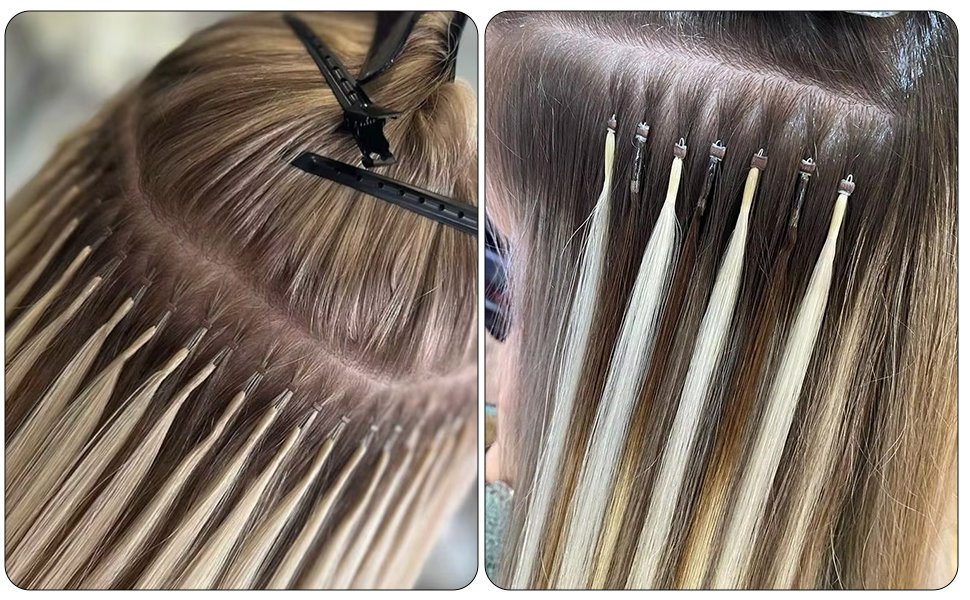
The installation process is clean and repeatable — when the product is consistent. The sourcing risk that most buyers overlook is batch consistency, not single-sample quality.
Why Pre-Shipment Inspection Misses the Real Risk
A standard pre-shipment inspection checks appearance: ring color uniformity, strand weight, texture match, packaging. These are necessary checks. They are not sufficient ones.
Nano ring quality degradation often appears after installation, not before. The failure modes that damage your reputation with buyers and end customers include:
- Ring closure drift — rings that hold on the first clamp but gradually loosen over 4–6 weeks of wear, especially with frequent washing.
- Strand shedding at the ring junction — where the extension hair meets the ring crimp, poor bonding leads to early shedding that looks like product failure to the end user.
- Color inconsistency across batch — individual strands that match your approved sample but vary noticeably within the same batch, creating an uneven look post-installation.
When you evaluate a nano ring supplier, ask specifically:
- Do they test ring closure retention after repeated opening and re-closing cycles?
- What is their batch-to-batch consistency protocol for strand weight and color?
- Can they provide documentation of their QC process — not just a certificate, but the actual testing steps?
Certificates matter, but they describe the standard, not the process. Ask to verify both.
What Your Stylists and Salon Buyers Need from the Product
If your customers are salons or stylists, they have installation-specific needs that affect the product spec you should order:
- Pre-tipped strands: Extension hair pre-folded into the ring is faster to install than loose strands. Confirm whether your supplier offers pre-loaded rings.
- Tool compatibility: Nano ring tools are not universal. Confirm your supplier's ring dimensions are compatible with standard nano pliers, or that they supply matched tools.
- Strand weight consistency: Variations in strand weight across a single order force stylists to compensate mid-installation, slowing their work and generating complaints.
How Much Do Nano Extensions Usually Cost?
Pricing is one of the first questions in any wholesale inquiry — and also one of the most frequently misread. Low unit cost looks attractive until returns and reorders erase the margin.
Wholesale nano ring hair extensions typically range from $15 to $60 per pack (approximately 20–25 strands) depending on hair type (human vs. synthetic), strand length, hair origin (Remy, double-drawn), and supplier MOQ. Retail and salon pricing for professional installation ranges significantly higher, often $200–$600+ per full head depending on market.
The price range is wide because the product variables are wide. Here is how those variables break down at the wholesale level.
Cost Variables Wholesale Buyers Should Evaluate
| Variable | Lower Cost End | Higher Cost End |
|---|---|---|
| Hair type | Synthetic blend | 100% Remy human hair |
| Hair origin | Standard processed | Double-drawn, cuticle-aligned |
| Strand length | 14–16 inches | 22–26 inches |
| Ring material | Aluminum | Copper or silicone-lined |
| Color range | Standard shades | Custom or ombre |
| MOQ | High volume | Low MOQ (custom orders) |
One assumption I consistently see from buyers evaluating nano ring for the first time: they assume custom orders — custom color, custom packaging, custom branding — require large minimum orders that are out of reach for a new SKU. In many cases, that assumption is simply wrong.
MOQ and lead time for nano ring are more negotiable than buyers expect. The barrier is usually not the manufacturer's minimum — it is the buyer not asking the question. If you are considering adding nano ring to your line but have been hesitant because of perceived MOQ constraints, it is worth having a direct conversation with your supplier before writing the SKU off.
Total Cost of Ownership vs. Unit Price
The number that matters is not the per-pack unit price. It is the total landed cost adjusted for return rate and reorder friction.
A supplier offering $18/pack with inconsistent batch quality will cost more than a supplier at $24/pack with documented QC and reliable delivery. Factor in:
- Shipping and import duties to your market (US/EU buyers should model both)
- Lead time reliability — delayed shipments have a direct cost in missed selling seasons
- Return and replacement rate from your downstream customers
- Communication efficiency with your supplier's sales team
What Are the Downsides of Nano Hair Extensions?
Every product category has trade-offs. Nano ring is no exception — and being clear-eyed about the downsides helps you position the product honestly to your customers and avoid the complaints that come from overselling.
The main downsides of nano ring hair extensions include: they require professional installation (DIY application is difficult), fine hair sections can still experience tension-related stress if clamping force is inconsistent, rings can slip if not properly closed or maintained, and the small size makes reapplication and maintenance more time-intensive than some alternative methods.
Understanding these downsides at the sourcing level helps you make better product decisions and set the right expectations with your downstream buyers.
The Downsides That Trace Back to the Product — Not the Stylist
Some nano ring complaints are application errors. Others are product failures. As a wholesale buyer, you need to distinguish between them, because only the second type is your liability.
Tension and root stress:
Nano rings are marketed as low-damage because they use no heat or adhesive. That is true — but only when the ring is correctly sized for the hair section and closed at the right clamping force. Oversized hair sections forced into a nano ring, or rings clamped too tight on fine hair, create localized tension that causes breakage over time. This is a product-fit failure, not a styling error.
Ring slippage:
Rings that do not hold their closed position are a manufacturing QC issue. They look fine in the sample. They fail in the field. Buyers who have experienced nano ring slippage complaints often report that the issue was not present in the initial sample batch — it emerged in subsequent orders. This is a batch consistency problem, and it is one of the most common patterns in buyer complaints we observe.
Maintenance intensity:
Nano ring extensions require regular maintenance appointments — typically every 6–8 weeks — to move rings up as the natural hair grows. This is a selling point for salon buyers (repeat appointment revenue) but a potential friction point for retail or DIY-oriented customers. Know your downstream customer before positioning this product.
Limited hair type range:
Nano ring works best on fine to medium hair. For thick or coarse hair textures, the attachment density required makes application impractical. If your customer base spans multiple hair types and textures, you may need nano ring and micro ring as complementary SKUs, not substitutes.
Nano Ring Hair Extensions: Nano Tip & Bond
The terminology in this product category creates confusion that affects buying decisions. Buyers often inquire about "nano extensions" and mean different things — and suppliers don't always clarify.
"Nano tip" and "nano bond" refer to keratin-bonded strand extensions (also called nano bond or nano tip extensions) that use a pre-attached keratin tip at the base of the strand. These are fused to natural hair using a heat tool. They are a distinct product from nano ring extensions, which use no heat or adhesive. The word "nano" in both cases refers to the small attachment size — not the attachment method.
This distinction matters commercially because the two products serve different salon workflows, require different tools, carry different removal processes, and appeal to different end-customer profiles.
Nano Ring vs. Nano Tip: Sourcing Implications
| Feature | Nano Ring | Nano Tip / Nano Bond |
|---|---|---|
| Attachment method | Metal ring, no heat | Keratin bond, heat fusion |
| Tools required | Nano pliers, loop needle | Heat fusion tool, bond remover |
| Removal process | Ring opened with pliers | Bond dissolved with remover |
| Heat involved | None | Yes (low heat, fusion tool) |
| Reusability of extension | Often yes | No (bond is single-use) |
| Best market positioning | Low-damage, heat-free appeal | Long-wear, secure hold appeal |
Why Buyers Mix These Up — and Why It Costs Them
The confusion most commonly happens at the inquiry stage on sourcing platforms. A buyer searches "nano hair extensions," browses listings that mix nano ring and nano tip products, and places an order assuming the products are interchangeable. They are not.
The downstream consequence is a stylists receiving a product they cannot install with their existing tools, or a consumer market where the "heat-free" positioning you sold falls apart because the product requires a fusion tool.
When evaluating a supplier, confirm:
- Is the product nano ring (bead method, no heat) or nano tip (keratin bond, heat method)?
- Does the supplier clearly differentiate both in their catalog and documentation?
- Can they supply either or both — and do they offer them under your private label?
Suppliers who conflate the two in their own catalog are a signal worth noting. It suggests QC documentation and product labeling may have the same problem.
Frequently Asked Questions
Can nano ring extensions be reused after removal?
In most cases, yes — the extension hair strand can be reused if it is in good condition after removal. The ring itself is typically replaced with a new one during reapplication. This is a practical selling point for salon buyers, as it reduces per-maintenance cost for end customers and encourages repeat service bookings.
Are nano ring extensions suitable for all hair types?
No. Nano ring extensions are best matched to fine or low-to-medium density natural hair. They are not ideal for coarse, very thick, or heavily textured hair because the attachment size is too small to distribute weight effectively. Wholesale buyers building a multi-hair-type product line should consider offering both nano and micro ring SKUs.
How long do nano ring hair extensions last?
With proper maintenance — typically every 6–8 weeks to reposition rings as natural hair grows — nano ring extensions can last 3–6 months before the hair needs to be replaced. Longevity depends heavily on the quality of the extension hair, the consistency of the ring's hold, and end-customer care habits.
What should wholesale buyers check beyond the sample?
The most important checks beyond sample approval are: batch color and weight consistency, ring closure retention over repeated use cycles, supplier QC documentation for installed performance (not just appearance), and lead time reliability across multiple orders. A good sample from an inconsistent supplier is a sourcing risk.
Is nano ring the same as nano bead or nano loop?
Yes — these terms are used interchangeably in the market. Nano bead, nano loop, nano ring, and sometimes nano link all describe the same product: a small metal ring used to attach extension hair to a natural strand without heat or adhesive. Confirm terminology with your supplier to ensure you are discussing the same product spec.
Conclusion
Nano ring hair extensions are not a complicated product to understand — but they are a risk-layered product to source well. The key decisions are not about ring color or unit price. They are about whether the product is correctly matched to your end customer's hair type, whether your supplier can maintain consistent batch quality beyond the initial sample, and whether you are buying nano ring or inadvertently ordering nano tip under the same search term.
Buyers who treat nano ring as a commodity re-order will eventually absorb the cost of that assumption through returns, complaints, and reorder friction. Buyers who approach it as a customer-fit and QC evaluation question build a more defensible product line.
Before placing your next nano ring order, work through this checklist:
- [ ] Have you confirmed your end customer's hair type aligns with nano ring sizing?
- [ ] Have you asked your supplier about their batch consistency QC process — not just their certifications?
- [ ] Have you confirmed the product is nano ring (bead method) and not nano tip (keratin bond