Sourcing hair extensions from China sounds straightforward until you wire your first deposit and receive a product that looks nothing like the sample. The stakes are real: wrong supplier, wrong quality, missed season. The good news is that most sourcing disasters are preventable — if you know what to look for and what to ask.
Finding a reliable hair extension supplier in China requires more than a price comparison. It is a structured vetting process. Buyers need to identify whether they are dealing with a factory or a middleman, evaluate production capacity and quality control processes, verify certifications independently, and ask the right questions before placing any order. Skipping this process is almost always what separates buyers who build profitable private-label brands from those who get burned on their first shipment.
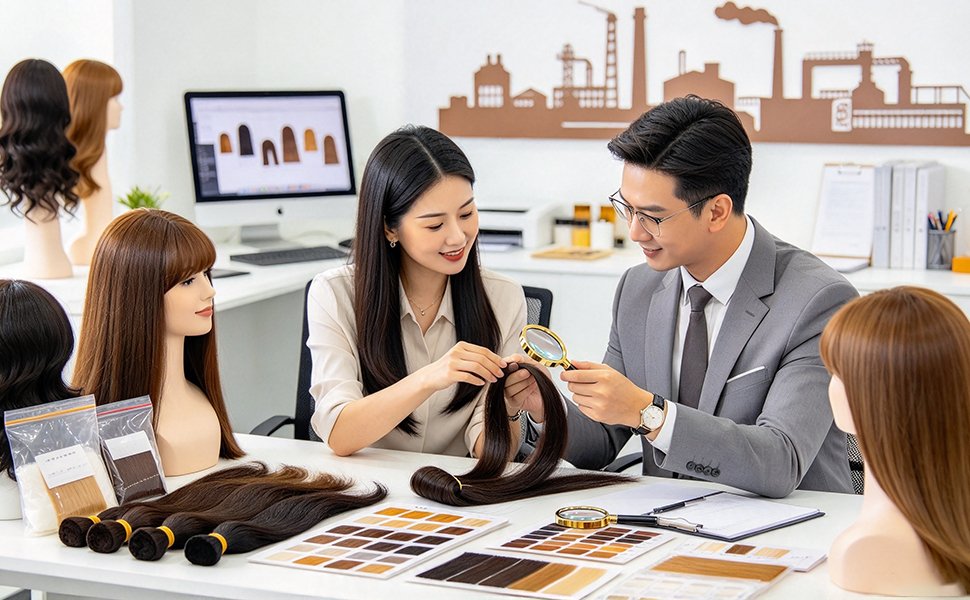
The answer above is the short version. The full picture is more nuanced — and more useful. Below, I will break down where to find manufacturers, how to evaluate each sourcing channel honestly, and which specific questions you should be asking before you commit to any supplier. This is written from the factory side. At Xpertric, we receive hundreds of buyer inquiries every year. We have seen exactly what separates buyers who build strong partnerships from those who end up disputing shipments six months later.
Where Can I Find Human Hair Extensions Manufacturers?
Most buyers already know the obvious platforms. But knowing where to look is not the same as understanding what each channel actually gives you — and what risks come with it.
Finding human hair extension manufacturers in China is possible through four main channels: Alibaba and similar B2B platforms, trade shows such as the Canton Fair, Google search and direct outreach, and referrals from industry contacts. Each channel carries a different risk profile for fraud, quality verification, and communication reliability.
Let me break down each channel the way I see it from the manufacturing side — with honesty about the limitations buyers rarely get told upfront.
Alibaba and B2B Marketplaces
Alibaba is the most common starting point for U.S.-based buyers sourcing weft extensions, clip-in extensions, tape-in hair, and wigs. The platform is convenient, the supplier density is high, and the inquiry process is fast.
The problem is that Alibaba does not reliably distinguish factories from trading companies. A significant portion of suppliers listing "human hair extensions" on Alibaba are intermediaries — companies that source product from actual factories, mark it up, and sell to you as if they were the manufacturer. This is not always dishonest (trading companies serve a role), but it does affect your price, your quality control access, and your ability to resolve issues directly.
How to spot a trading company pretending to be a factory:
- They have no factory address listed, or the address is a commercial office building
- They cannot provide a specific production capacity per week (factories know this number precisely)
- Their product catalogue is unusually broad — selling weft, synthetic, wigs, clip-in, ponytails, keratin bonds all at once with no specialization
- They cannot name their internal QC department or process
- Lead times shift dramatically depending on what you order
What to look for in a genuine manufacturer on Alibaba:
- A verifiable factory address (cross-check with Google Maps or ask for a video call showing the production floor)
- A "Verified Supplier" badge combined with a factory audit report (request the full report, not just the badge)
- Narrower product focus — factories typically specialize in specific product categories
- Clear MOQ tied to production minimums, not arbitrary round numbers
Alibaba is a useful starting point, not a finishing point. Use it to build a shortlist of candidates, then vet each one through direct communication and documentation requests.
Trade Shows: Canton Fair and Industry Exhibitions
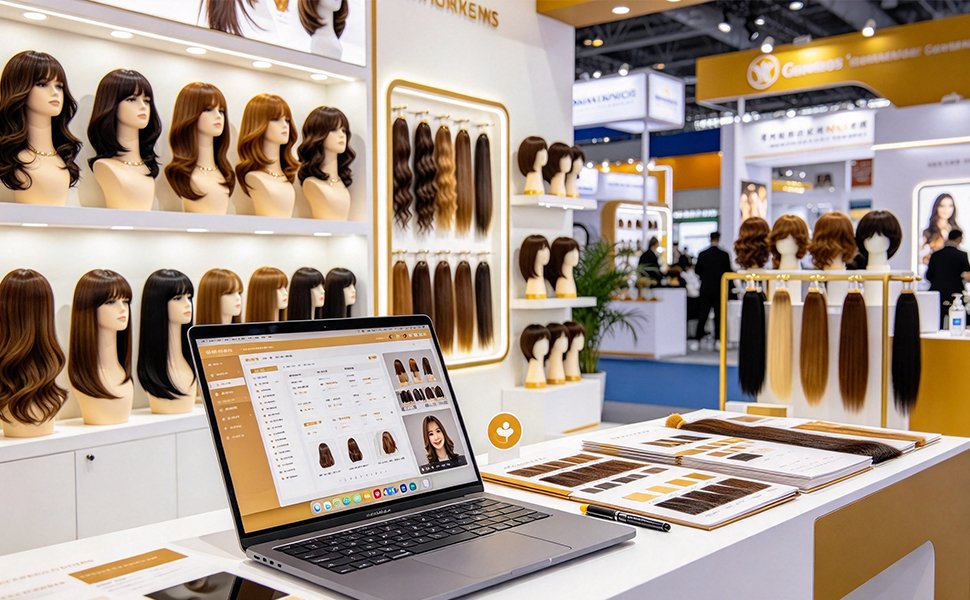
Trade shows are the most underrated sourcing channel for hair extension buyers who are serious about quality and long-term partnerships. The Canton Fair (Guangzhou), held twice a year, includes a significant hair extension section. Specialized beauty industry shows also exist in cities like Shanghai.
Why trade shows are valuable:
- You can meet supplier representatives face-to-face, which changes the communication dynamic entirely
- You can physically inspect product quality, texture, and weft construction on the spot
- You can visit factory booths and ask for factory visit invitations during the show
- You can compare 10–15 suppliers in a single day, with samples in hand
The limitation: Trade shows require travel investment, and not every exhibitor is a manufacturer. Some trading companies attend Canton Fair specifically because buyers assume everyone at the show is a factory.
At trade shows, always ask for a factory visit during your trip. A manufacturer with nothing to hide will welcome it. One that declines or makes excuses is worth noting.
Google Search and Direct Outreach
Google searches for terms like "hair extension manufacturer China" or "weft extension factory Shandong" can surface factory websites that do not appear on Alibaba. This is actually an underused method. Many mid-size manufacturers invest in direct website presence precisely to attract serious wholesale buyers who prefer to bypass marketplace intermediaries.
The risk with Google outreach is harder to quantify — there is no platform vetting layer at all. You are relying entirely on your own due diligence. This method rewards buyers who are willing to ask detailed verification questions upfront.
Referrals and Industry Networks
If you know other brand owners or distributors sourcing from China, a warm referral is the highest-trust starting point available. You are inheriting someone else's vetting history. This is rare but worth pursuing — industry groups, trade associations, and LinkedIn networks are good places to build these connections over time.
What Is the Best Way to Buy Hair Extensions in China?
Knowing where to find suppliers is one thing. Knowing how to buy — the actual process of evaluating, sampling, and contracting — is where most first-time sourcing mistakes happen.
The best way to buy hair extensions in China is to treat the process as a structured supplier audit, not a price negotiation. Buyers should request samples before any bulk order, verify factory credentials independently, clarify customization capabilities, and confirm quality control procedures in writing before signing any purchase agreement.
Here is how I recommend structuring the process, based on what we see work — and what we see fail — from the factory side.
Step 1: Build a Shortlist of 4–6 Candidates
Do not evaluate one supplier at a time. Run parallel outreach with at least four to six candidates so you have a real comparison baseline. Use all available channels — Alibaba, Google, trade show contacts — to ensure you are not accidentally comparing multiple listings for the same company.
Step 2: Send a Structured Inquiry
A vague inquiry ("how much for 100 bundles of hair?") signals to factories that you are a low-investment buyer. Factories prioritize serious buyers. A structured inquiry should include:
- Specific product type (e.g., weft extension, double drawn, 20 inches, natural black)
- Target quantity and frequency of order
- Customization requirements (private label, custom packaging, specific hair source)
- Timeline expectations
- Request for factory certification documentation
Step 3: Request Physical Samples
Never place a bulk order based on photos or video alone. Request physical samples — most reputable factories charge a nominal sample fee that is credited toward your first order. Evaluate the sample for:
| Quality Indicator | What to Check |
|---|---|
| Weft construction | Is the weft tight and even? Any shedding when gently pulled? |
| Hair texture | Does it match the listed specification (e.g., straight, body wave)? |
| Hair origin claim | Remy vs. non-Remy: check for cuticle alignment by rubbing hair between fingers |
| Density | Does the weight per bundle match the stated grams? |
| Color accuracy | Does it match the color swatch or color ring you approved? |
Step 4: Conduct a Video Factory Tour
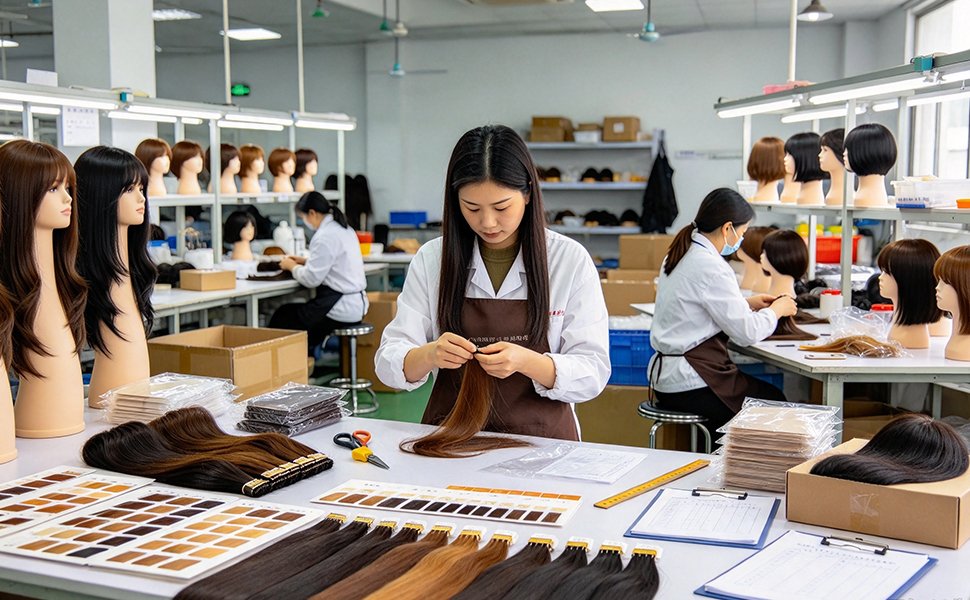
If you cannot visit in person, request a live video call from the factory floor during production hours. This is a simple but effective verification step. A genuine factory can show you production lines, workers, equipment, and finished inventory on short notice. A trading company cannot.
Step 5: Verify Certifications Independently
This is where buyers most commonly skip a critical step. Certifications matter for your target market — but a PDF of a certificate proves nothing. Request the original certificate number and issuing body, then verify directly with the issuing organization.
For the U.S. market, relevant certifications may include SGS testing reports for product safety. For EU markets, REACH compliance documentation is relevant. Do not assume that what applies in one market applies in another — flag this for your own legal or compliance team to verify based on your specific distribution context.
A word of caution from experience: Certificate fraud is a known pattern in the hair extension supply chain. We have seen buyers arrive with "certified" products from previous suppliers that could not be independently verified. Always verify the certificate issuer directly — not the supplier's assurance.
Step 6: Clarify Terms in Writing Before Ordering
Before any deposit is sent, confirm in writing:
- Unit pricing and MOQ per SKU
- Lead time from confirmed payment
- Packaging and labeling specifications
- Reorder process and pricing consistency
- Dispute and returns policy
Which Questions Should I Ask When Purchasing Hair Extensions?
Most buyers ask about price and lead time. These are the wrong first questions. Price without context is meaningless — and lead time is only reliable if you understand the factory's actual production capacity.
The most important questions to ask a hair extension supplier cover production capacity, customization limits, quality control process, certificate verification, and account continuity. These questions reveal whether a supplier can be a long-term partner or only a one-time transaction.
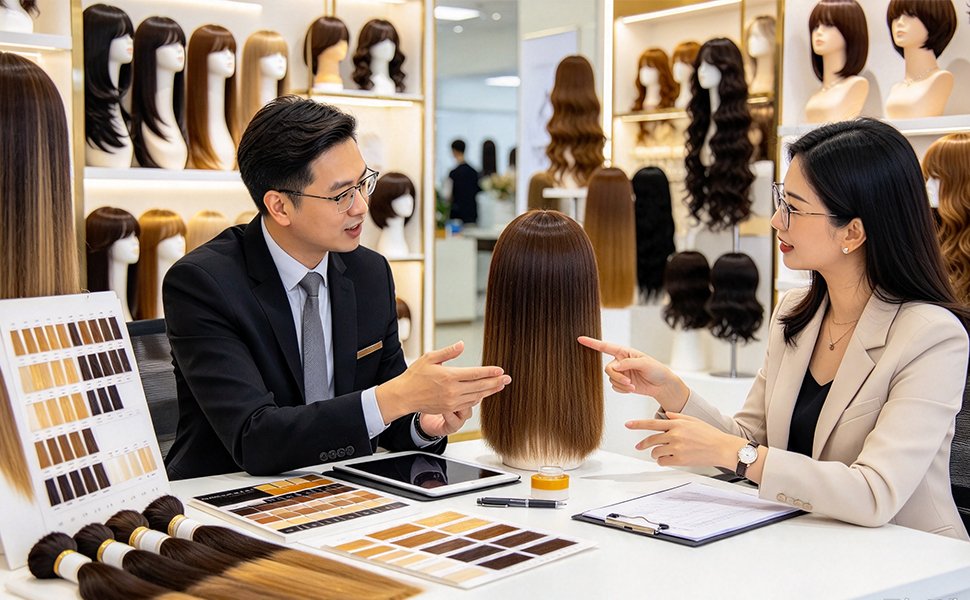
Below is a structured list of the questions I believe every buyer should ask — along with the reason each one matters, drawn from direct experience on the factory side.
Production and Capacity Questions
1. What is your actual weekly production capacity for [specific product]?
Why it matters: A real factory can answer this precisely. If a supplier says "we can produce any quantity," that is a red flag. Factories have physical constraints. At Xpertric, we operate five production lines, and we can tell a buyer exactly how many bundles of weft extension we can produce per week. Vague answers suggest the supplier is outsourcing or speculating.
2. How many production lines do you operate?
Why it matters: This tells you the true scale of the operation and whether they can realistically fulfill your order without subcontracting it to a third party — which breaks the quality control chain entirely.
3. What happens to my order during peak season?
Why it matters: Chinese factories face major production pressure before Chinese New Year, Golden Week, and other national holidays. A serious factory plans for this. Ask how they handle buyer orders during these periods, and what lead time adjustments apply.
Quality Control Questions
4. Is your QC department in-house or outsourced?
Why it matters: In-house QC means the factory controls quality at every stage. Outsourced QC often means a third party does a final inspection only — which catches visible defects but misses construction or density issues. Ask them to describe their QC process step by step.
5. What are your quality checkpoints during production?
Why it matters: Quality control happens at multiple stages: raw material inspection, in-process checks, and final pre-shipment inspection. A factory that only checks at the end of production has less control than one that checks throughout.
6. What is your defect rate, and how do you handle it when defects reach a buyer?
Why it matters: No factory has a zero-defect rate. What matters is how they respond. A factory that has no answer — or one that says defects "never happen" — is not credible. Ask for their stated acceptable defect threshold and the claims process.
Customization Questions
7. What customization options do you offer for private-label buyers?
Why it matters: For buyers who rebrand product under their own label (the Mark John model), customization capability is central to the business case. Ask specifically about: custom weft width, custom color, custom packaging, logo printing, and minimum quantities per custom SKU.
8. Who owns the tooling or packaging dies for custom designs?
Why it matters: If you pay for custom packaging molds and the supplier retains ownership, you cannot easily switch factories without losing your packaging investment. Clarify ownership in writing.
Certification and Compliance Questions
9. Can I verify your certificates directly with the issuing organization?
Why it matters: As noted above, certificate fraud is real. A trustworthy supplier will not hesitate to provide the certificate registration number and the issuing body's contact information. Any resistance to this request is a warning sign.
10. Which markets are your current certifications valid for?
Why it matters: A certificate that satisfies EU REACH compliance does not automatically satisfy U.S. requirements, and vice versa. Confirm that the certifications match your target distribution market. Consult your own compliance team for final determination — this is market-specific and beyond what a supplier can certify on your behalf.
Business Continuity Questions
11. Who will handle my account if my assigned sales rep leaves?
Why it matters: This is a question almost no buyer thinks to ask — until the rep they built a relationship with disappears, and no one at the factory has context on their order history, customization specs, or pricing agreements. A professional factory has account handover processes.
12. What is your payment term flexibility for reorder buyers?
Why it matters: Most factories require 30–50% deposit upfront for new buyers and balance before shipment. For established buyers, better terms may be available. Understanding the payment structure upfront prevents friction later.
Frequently Asked Questions
Is it better to buy hair extensions from a factory or a trading company in China?
Buying directly from a factory generally offers better pricing, faster issue resolution, and direct access to quality control. Trading companies can be useful for buyers who need multiple product types from a single source. For hair extension buyers focused on weft, clip-in, or tape-in products specifically, factory-direct sourcing is usually the stronger choice.
What is a reasonable MOQ when sourcing hair extensions from China?
MOQ varies by product type and supplier. For weft hair extensions, typical factory MOQs range from 50 to 100 bundles per style or color for standard products. Custom private-label orders may carry higher minimums. Always verify whether the quoted MOQ reflects production minimums or arbitrary pricing tiers.
How do I verify that a Chinese hair extension supplier is a real factory?
Request a live video call from the production floor during working hours. Ask for the factory's business license and cross-reference the registered address. Request production-specific documents such as QC checklists or raw material inspection records. A real factory can provide all of these quickly.
How long does it take to receive a hair extension order from China?
Standard production lead times for bulk hair extension orders range from 15 to 30 business days depending on order volume and customization requirements. Shipping time adds 3–7 business days by air or 25–35 days by sea. Always confirm lead time in writing and factor in Chinese national holidays.
What certifications should I ask for when importing hair extensions to the U.S.?
Common documentation includes SGS or equivalent third-party testing reports. Requirements vary by distribution channel and state. Buyers should consult a licensed customs broker or compliance specialist for their specific import situation — supplier-provided certificates confirm product testing but do not replace legal import compliance evaluation.
Conclusion
Sourcing hair extensions from China is one of the highest-leverage decisions a brand owner or distributor can make — and one of the easiest to get wrong. The buyers who succeed are not the ones who found the lowest price. They are the ones who treated supplier selection as a vetting process: checking production capacity, testing samples, verifying certificates independently, and asking the questions that reveal whether a supplier is actually a factory.
The channels you use — Alibaba, trade shows, Google, referrals — each carry different risks. Understanding those risks upfront shapes how you evaluate every response you receive. And the questions you ask before your first order are far more valuable than any negotiation after a problem ships.
At Xpertric, we manufacture weft extensions, clip-in hair extensions, tape-in extensions, hair bundles, and wigs across five production lines in Qingdao. We work with wholesale buyers, brand owners, and distributors across the U.S., Europe, and beyond. If you are actively evaluating suppliers and want to ask us the hard questions — we welcome it.
Contact Sheilla Hou at info@xpertric.com or visit www.xpertric.com to request samples, factory documentation, or a direct production floor video call.